Be a Berean: How God's Word Calls Us to Study, Search, and Stand on Scripture

Updated: Jun 10
The Bible Bloom · Back to the Basics Series · June 2026
Yvonne Perry

There is a group of people in the New Testament who are described with one of the highest compliments in all of Scripture and they weren't apostles. They weren't kings or prophets. They were a congregation of everyday believers in a city called Berea. And what set them apart was not their title or their pedigree. It was their hunger for the Word of God.
If you have ever wondered how you are supposed to read your Bible, how to understand what you are reading, or how to know if what you are being taught lines up with truth — the Bereans have something to show you. Pull up a chair. This is for you.
Who Were the Bereans?
"These were more noble than those in Thessalonica, in that they received the word with all readiness of mind, and searched the scriptures daily, whether those things were so." — Acts 17:11 (KJV)
In Acts 17, the Apostle Paul and Silas arrived in Berea on their missionary journey, fresh from a difficult experience in Thessalonica where their message was rejected and they were run out of town by an angry mob. But Berea was different.
When Paul stood up and preached the gospel — declaring that Jesus was the promised Messiah, that He had died and risen again — the Bereans did something remarkable. They didn't just accept it. They didn't just reject it either. They went home and opened their scrolls. They searched the Scriptures. They compared what Paul said against what the Word of God said. And because of that holy diligence, the Bible tells us that many of them believed.
The word used for "searched" in the original Greek is anakrino — which means to examine carefully, to investigate, to scrutinize. This was not a casual glance. This was not a skim. This was intentional, disciplined, daily engagement with the Word of God.
The Bereans teach us that receiving the Word with eagerness and examining it carefully are not opposites — they work together. You can be hungry for the Word and committed to studying it accurately.
Why Studying the Word Matters
We live in a world full of voices. Podcasts, social media, television ministries, books, and opinions — all competing for your attention, all claiming to speak the truth. The only anchor you have is the Word of God. And an anchor only holds if you know how to use it.
1. The Word Is Alive and Active
"For the word of God is quick, and powerful, and sharper than any two edged sword, piercing even to the dividing asunder of soul and spirit, and of the joints and marrow, and is a discerner of the thoughts and intents of the heart." — Hebrews 4:12 (KJV)
The Bible is not a dead historical document. It is a living, breathing, Spirit-empowered Word that works on you every time you engage with it. It discerns. It divides. It gets into places inside you that no counselor, no sermon, and no self-help book can reach. But it can only work in you if you open it and trust what you are reading.
2. Studying Keeps You from Being Deceived
"Study to shew thyself approved unto God, a workman that needeth not to be ashamed, rightly dividing the word of truth." — 2 Timothy 2:15 (KJV)
Paul's instruction to Timothy is clear: study. Not casually read. Not occasionally browse. Study. The word "rightly dividing" means cutting it straight — like a craftsman who makes a precise, accurate cut. When you know the Word for yourself, you are not easily moved by false teaching, misquoted Scripture, or half-truths dressed up in spiritual language.
The Bereans were more noble because they did not take anyone's word for it — not even an apostle's. They brought everything to the standard of Scripture. That is not disrespect. That is wisdom.
3. The Word Is Your Spiritual Nourishment
"But he answered and said, It is written, Man shall not live by bread alone, but by every word that proceedeth out of the mouth of God." — Matthew 4:4 (KJV)
When Jesus was tempted in the wilderness, He didn't pray for a miracle. He quoted Scripture. Three times the enemy came at Him. Three times Jesus responded with the written Word of God. His weapon was the Word. Our weapon is the Word. But you cannot wield what you do not know.
"As newborn babes, desire the sincere milk of the word, that ye may grow thereby." — 1 Peter 2:2 (KJV)
Just as your physical body requires daily nourishment, your spirit requires daily feeding from the Word. Skipping the Word is the spiritual equivalent of skipping meals. You may survive a day or two, but over time, the weakness shows.
4. The Word Renews Your Mind
"And be not conformed to this world: but be ye transformed by the renewing of your mind, that ye may prove what is that good, and acceptable, and perfect, will of God." — Romans 12:2 (KJV)
One of the greatest battles of your Christian walk is not fought in the streets — it is fought in your mind. The way you think shapes the way you live. The Word of God is the tool God uses to transform your thinking from the inside out. Every time you read it, meditate on it, and allow it to take root — your mind is being renewed. You begin to see yourself, your circumstances, and situations the way God sees them.
The Importance of Praying Before You Read
Here is something that many new believers — and even seasoned ones — sometimes overlook: the Bible is a Spirit-breathed book. It was written by human hands under the inspiration of the Holy Spirit, and it is best understood through the illumination of the Holy Spirit. That means before you open the Word, you need to invite the Author into the room.
"But the Comforter, which is the Holy Ghost, whom the Father will send in my name, he shall teach you all things, and bring all things to your remembrance, whatsoever I have said unto you." — John 14:26 (KJV)
Jesus promised a Teacher. Not just a commentator. Not just an emotion. The Holy Spirit is your personal guide into the truth of God's Word. But we must be intentional about creating space for Him to speak.
How to Pray Before You Read
Your prayer before reading doesn't have to be long or elaborate. What matters is sincerity and openness. Here are some things you can bring before God:
Lord, open my eyes that I may see what Your Word wants to reveal to me. (Psalm 119:18)
Holy Spirit, teach me and guide me into all truth. (John 16:13)
Give me a heart that is ready to receive and willing to obey what You show me.
Remove any distraction or hardness from my heart. I come with an open mind and an open spirit.
Let Your Word not return to me void — let it accomplish what You sent it to do in my life. (Isaiah 55:11)
When you pray before you read, you are acknowledging that the bible is not just a book to read. You are positioning yourself as a student before a Teacher. You are saying, "God, I don't just want information — I want revelation." And that posture changes everything.
Practical Tip: Before you open your Bible, sit still for 60 seconds. Take a breath. Ask the Holy Spirit to speak to you and give revelation of what you are reading. Then read expecting to hear from God — not just to complete a reading plan.
How to Study the Scriptures Like a Berean
Being a Berean is not about being skeptical or argumentative. It is about being diligent, humble, and hungry. Here are practical ways to study the Word the way God intends:
Read in Context
One of the most important rules of Bible study is this: a text without a context is a pretext. Before you build a doctrine on a verse, read the verses before and after it. Read the whole chapter. Understand who is speaking, who they are speaking to, and what the situation is. Context is everything.
Look for the Plain Meaning First
When you read a passage, ask: What does this say? Not what do I want it to say — what does it actually say? Start with the plain meaning before you go searching for hidden or deeper things. God's Word is not a secret code. He wrote it so His people could understand it.
Let Scripture Interpret Scripture
The best commentary on the Bible is the Bible itself. When you encounter a passage that is difficult to understand, look for other Scriptures that address the same topic. Compare what God says in one place with what He says in another. The Word will always be consistent with itself.
Meditate on What You Read
"This book of the law shall not depart out of thy mouth; but thou shalt meditate therein day and night, that thou mayest observe to do according to all that is written therein: for then thou shalt make thy way prosperous, and then thou shalt have good success." — Joshua 1:8 (KJV)
Meditation in Scripture does not mean emptying your mind. It means filling your mind with the Word and turning it over and over — like chewing food to extract every nutrient. Read a verse. Sit with it. Ask: What does this reveal about God? What does this reveal about me? How does this apply to my life today?
Write It Down
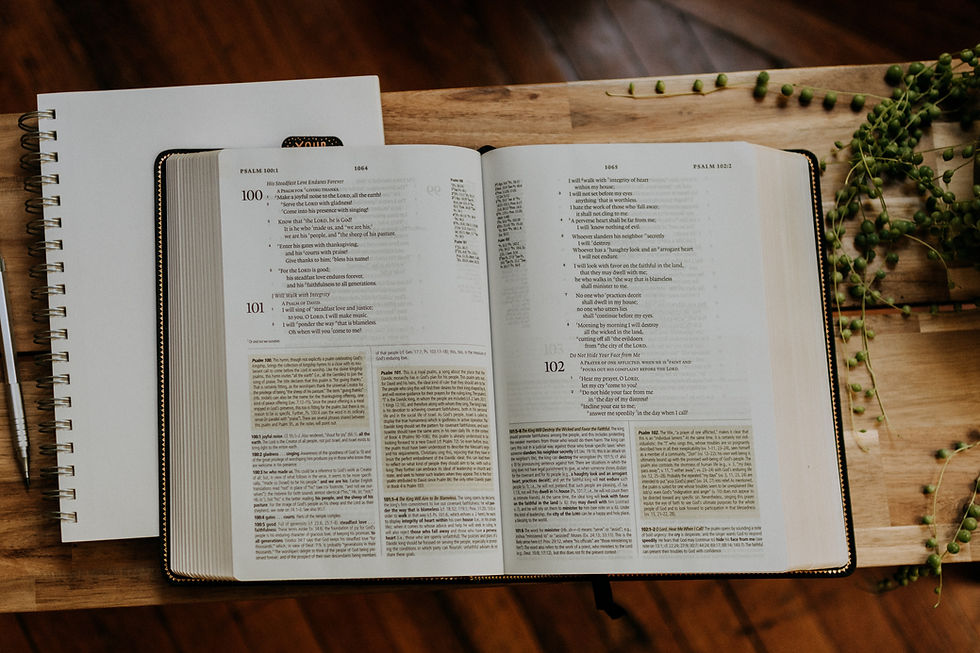
Keep a journal. Write out the Scriptures you are reading. Make notes of what God shows you. Writing slows you down in the best way — it forces you to process rather than skim. The Bereans searched the Scriptures daily. Make your study a daily discipline, even if it is only 10–15 minutes to start.
Note: It is okay to write in your bible!
Apply What You Learn
"But be ye doers of the word, and not hearers only, deceiving your own selves." — James 1:22 (KJV)
Knowledge of the Word without application is just information. The goal of Bible study is not to fill your head — it is to transform your life. After every study session, ask yourself: How can I apply what I just read? Then do it.
More Scriptures to Anchor Your Study Life
"Thy word have I hid in mine heart, that I might not sin against thee." — Psalm 119:11 (KJV)
"The entrance of thy words giveth light; it giveth understanding unto the simple." — Psalm 119:130 (KJV)
"All scripture is given by inspiration of God, and is profitable for doctrine, for reproof, for correction, for instruction in righteousness: That the man of God may be perfect, throughly furnished unto all good works." — 2 Timothy 3:16–17 (KJV)
"For whatsoever things were written aforetime were written for our learning, that we through patience and comfort of the scriptures might have hope." — Romans 15:4 (KJV)
"So then faith cometh by hearing, and hearing by the word of God." — Romans 10:17 (KJV)
Your Berean Challenge
The Bereans searched the Scriptures daily. Not weekly. Not whenever they felt inspired. Daily. And it is that kind of consistent, devoted engagement with the Word that produces faith and fruit that remains.
Here is your challenge this week:
Choose a set time each day to open your Bible — morning, lunch, or evening. Put it on your calendar like an appointment you cannot miss or set an alarm.
Before you read, pray. Ask the Holy Spirit to speak to you and open your understanding. Even 60 seconds of intentional prayer changes everything.
Start with one passage — even one chapter. Read it slowly. Read it out loud if you can. Let the words land.
Write down one thing God shows you. Just one. Then carry it with you through your day.
Share what you learned with someone. Teaching and sharing what you receive locks it in your spirit.
You were not saved to have secondhand faith. God's Word is for you. His Spirit is in you. His truth is available to you every single day. Be a Berean. Open the book. Search the scriptures. And let the living word of God do what only it can do in your life.


Comments